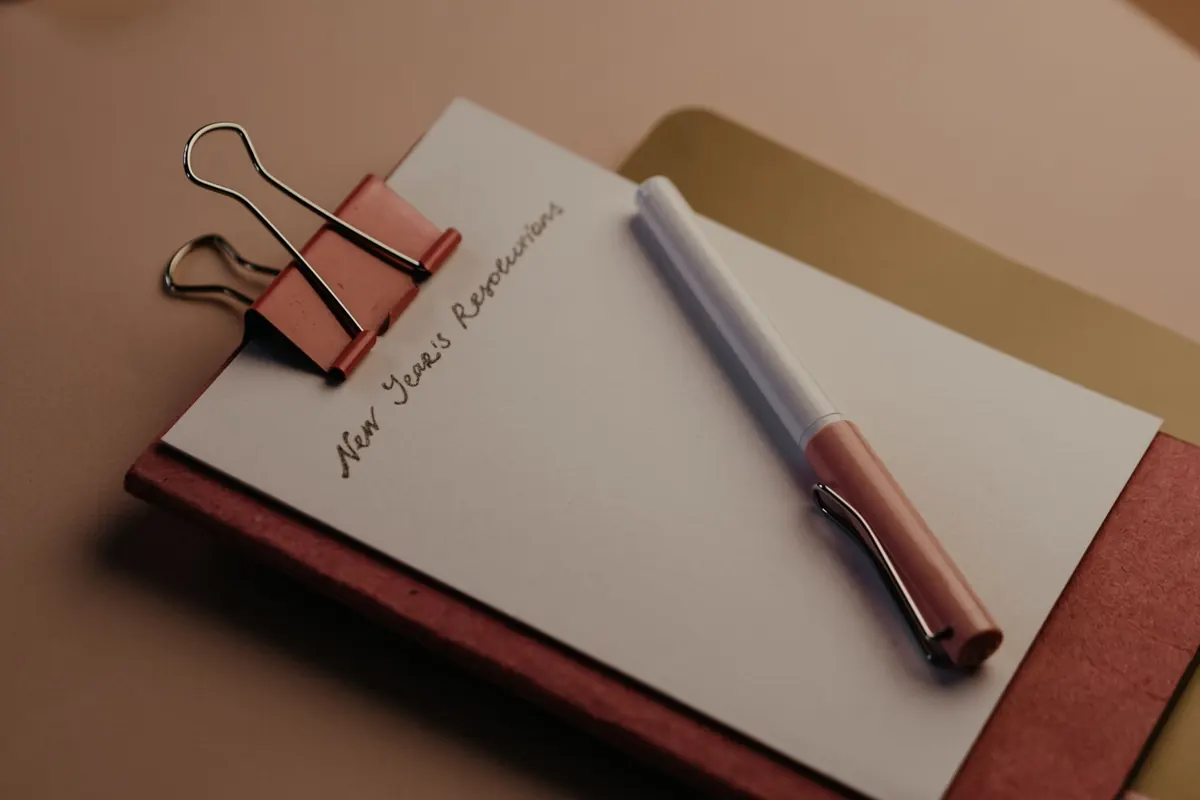
The notebook seemed like a good idea at the airport. By day three it is buried under a scarf, and the only entry reads “Tuesday — hot. Tired.” You come home, shelve it, and never open it again. That is not a failure of discipline. It is a failure of design.
A travel diary you will actually reread is built on a few small decisions made before you leave: what deserves to be written down, how often you will do it, and who you are writing for. Work through the checklist below in the order you will meet each decision, and you will end the trip with something better than a souvenir.
Decide what job the diary has
Ask yourself what you want this object to be in two years. Most people vaguely want everything — facts, feelings, ticket stubs — and end up with a mush of half-finished sentences. Pick a primary purpose and let the rest be a bonus.
- The log. Routes, names of places, what you ordered, what it cost. Useful, unsentimental, easy to keep.
- The mood book. How the day felt, what you argued about, what you were afraid of. Harder to write, better to read later.
- The collection. One line per item, with a receipt or a leaf pressed beside it. Good for people who hate writing but love keeping.
The medium matters less than the habit, with one exception: the notebook you carry every day beats the beautiful one that stays in the hotel room. A cheap pocket book that travels is worth more than a leather-bound one that doesn’t.
The ten-minute daily checklist
Long entries are not the goal. Five short lines, written before bed or with your first coffee, will carry more of the trip than a heroic two-page essay every ten days. Here is what to reach for, in order:
- One thing you saw that a photograph would ruin. The light on a wet street. The dog asleep outside the bakery.
- One thing someone said, in their words if you can manage it. “You walk like a Roman,” said the man at the bus stop. That line is worth more than a paragraph of description.
- One surprise. What did not match what you expected. The beach was smaller. The food was blander. The museum was free.
- One small annoyance. Honesty keeps a diary readable. A page of unbroken delight is boring even to you.
- One line to your future self. “Come back in September.” “Do not take the night bus again.”
When the day gives you nothing
Write the flat version instead: where you were, what the weather did, what you ate, and one detail you noticed on the way back to the room. Four lines. It is enough, and it keeps the chain intact.
How often to write, and how to survive the gap
Daily is the ideal; three times a week is realistic; once per city is the floor. Whatever you choose, protect two rules. First, write about yesterday in the morning rather than about today at night — you will be less tired and your impressions will still be sharp. Second, never skip two days in a row. One missed day is an accident. Two is a new habit.
If you do fall behind, resist the urge to reconstruct. Turning three lost days into a narrative means inventing dialogue and smoothing over the parts you have forgotten. Instead, make a catch-up page: each day gets a date and three words. Rain. Wrong bus. Good soup. Then start fresh from today. Where you are unsure of a name or a price, say so in the margin — “I think it was called Il Gatto” — and move on. Uncertainty is honest; invention is not.
Write for the rereader, not for an audience
The person who will open this book is you, months or years later, with most of the trip gone. Write for that person. They will not remember the name of the church. Give it to them: not “a nice church” but “Santa Maria della Salute, the one with the marble swirl on the ceiling.”
Include the boring logistics. Future you, planning a return trip, will be delighted to find the name of the street, the price of the ferry, the fact that the good bakery closes on Mondays. Nobody else will ever read this. You can stop performing.
Details that age well
- Proper nouns. Streets, restaurants, people, the name of the hotel cat.
- Sensory specifics. What it smelled like, what the noise was, how hot it actually was.
- Expectation versus reality. What you thought the place would be, and what it was.
- Who you were with, and one thing about them that day.
- The moment you changed your mind about something — a city, a plan, a person.
Keep the kit and the format small
A pen that does not skip, a notebook that fits a pocket or a small bag, a ziplock bag for receipts, and a short strip of tape for the things you want to stick in. That is the whole kit. Anything more and you will start leaving pieces in hotel rooms.
Set up the pages before the first entry. Date and place in the top corner of every page, always in the same spot, so you can flip through later and find the week you want. Number the pages. Leave the first two blank for an index you fill in at the end — “Rome, p. 14; the argument on the train, p. 22.” It takes five minutes and turns a notebook into a book you can navigate.
What to leave out
Skip the day-by-day itinerary; that is what tickets are for. Skip the apologies for not writing, which are dull on the page and duller on the reread. Skip anything written for an imagined reader. And skip the reflex to soften every difficult moment — you can be honest and kind at the same time, and the difficult pages are often the ones you will value most.
The twenty minutes before you unpack
Before the trip evaporates into laundry and email, sit down with the notebook for twenty minutes. Read it straight through without editing. Mark the three entries you would most want to find again, and add them to your index.
Then write one final page: what you would do again, and what you would do differently. Put the dates and the places on the cover in marker. Finally, leave the book somewhere you will see it — a shelf by your desk, not a box in a cupboard.
The entries are what make a travel diary; that last half hour is what makes it rereadable. Do the ten minutes a day, keep the pen with the book, and this is the trip you will still be able to open in five years.
Photo: Edeltravel_ / Pixabay