The first coffee of the morning in Florence is taken standing up. You drink it at a marble counter in about ninety seconds, elbow to elbow with someone reading the sports pages, and then the cup is down and you're back on the street with the whole day in front of you. It is a wonderful habit, and a terrible one for anyone who wants to write.
The fix is simple: sit down. Order a second coffee, take a table, and let the city come to you for an hour. Florence is one of the easiest places in Europe to journal in, not because the cafés are quiet — most of them are not — but because nobody finds it strange to see a person alone with a notebook and a small cup, thinking.
What follows are five prompts built for exactly that situation. Each takes ten to twenty minutes and needs nothing more than a pen, a notebook and whatever you've ordered. Use them in the café rather than saving them for the evening, because the point is to catch the morning while it is still in the room.
Finding a Table That Works
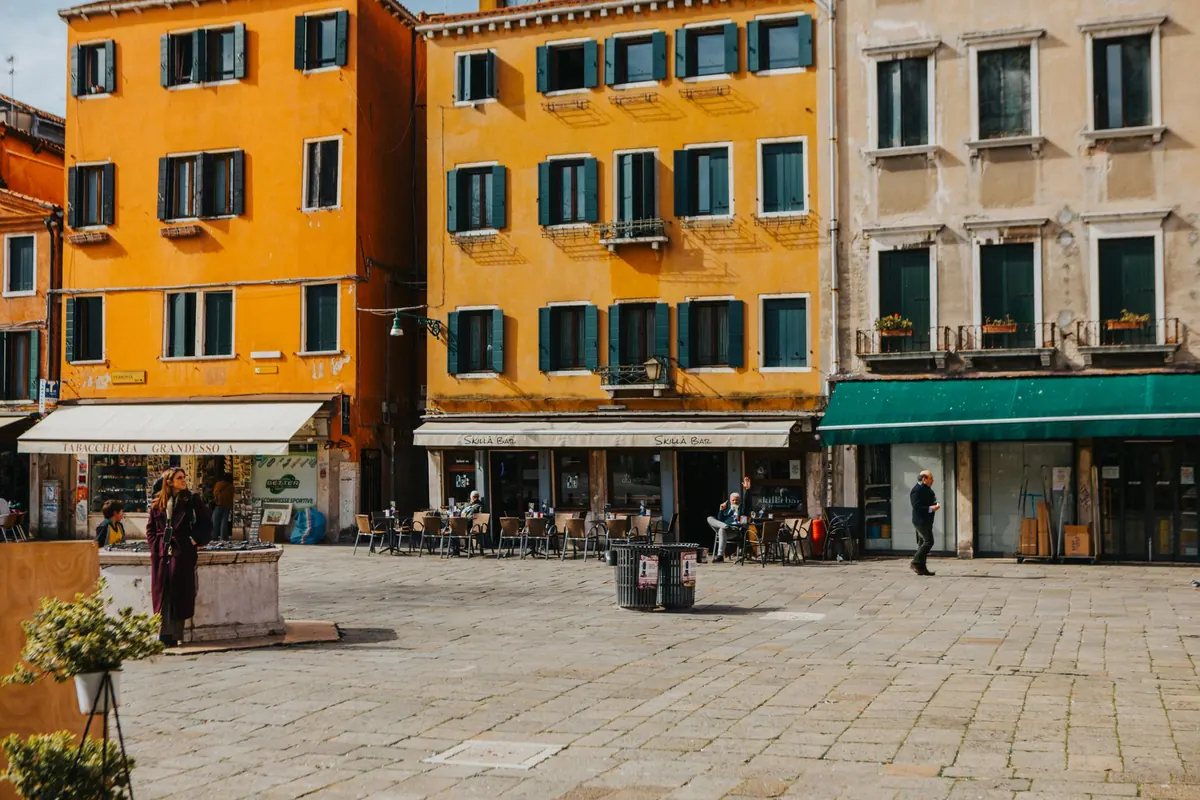
Not every bar is a writing bar. The grand historic cafés — Gilli and Paszkowski on Piazza della Repubblica, Rivoire on Piazza della Signoria — are gorgeous and worth one visit with a notebook open, but you pay for the seat and the view, and staff are understandably keen to turn tables at lunch. For longer sessions, look at the Oltrarno: the quieter streets behind Santo Spirito, San Niccolò, or the small bars near the Sant'Ambrogio market, where a lone customer with an espresso and an open notebook is part of the furniture.
A few practical things worth knowing before you settle in:
- Prices depend on where you sit. The same coffee costs less at the bar (banco) than at a table (tavolo), and more again out on the terrace. This is normal, and it is posted.
- A coffee is not rent on a chair. If you're staying more than about forty minutes, order something else — a water, a pastry, a second coffee. It keeps the table yours without any awkwardness.
- Learn the rhythm. Mornings are fast and standing. The quiet stretch is usually mid-afternoon, when many kitchens close and the room empties out. Some small bars shut for a few weeks in August.
- Leave the laptop at home. Phones are fine. A laptop at a busy lunch table reads badly; a notebook draws friendlier glances.
1. The Counter Sketch
Start at the bar, before you sit. Stand with your coffee and watch the person making it for two or three minutes.
Write a portrait of the person making your coffee. Hands first, then the machine, then the voice. Don't name them and don't invent a life for them — just get down what you can actually see.
This one works because a café bar is a small theatre. Watch how the portafilter is knocked out, how the milk jug is wiped, how a regular's order is remembered without being asked. You'll notice things you would have missed while checking your phone: the rhythm of a working morning, the way a name gets called out to the room, the exact moment the rush breaks.
A variation for the shy
If you'd rather not stare at a stranger, sketch the counter itself. The cups stacked in their pyramid, the pastries under glass, the till, the bottles behind. Describe the whole scene in one paragraph without using the words beautiful or charming.
2. A Sound Map of the Piazza
Choose a table near a window or outside. Put the pen down for two minutes and listen. Then list every sound you can identify, without editing.
Write down eight sounds. Put them in order from loudest to quietest, then write one line about the one you would keep if you could keep only one.
Florence has a particular sound layer: scooters on stone, a church bell that always seems closer than it is, the flat crack of a delivery van door, someone arguing pleasantly about football, the hiss of steam. Listing them pins a place to a moment in a way photographs rarely do. Do this in two different squares on the same day and compare the lists — Piazza Santo Spirito at nine in the morning and Piazza Santa Croce at six in the evening are practically different cities.
3. The Stranger's Errand
Pick one person within sight — someone at the next table, someone crossing the square with a bag of groceries. Give them a name, an errand, and a reason for it.
Where is this person going in the next hour, and why does it matter? Write it in six sentences. Keep them kind.
The rule about kindness matters. It is easy to slide into mockery when you're watching strangers, and a journal that is cruel about people you will never meet is not a journal you'll want to reread. Invent something generous instead: the woman with the shopping bag is buying ingredients for a neighbour who has been unwell. The man straightening his jacket is meeting his daughter's new partner for the first time.
This prompt is also the fastest cure for the feeling that you have nothing to write about. You always have a room full of people. Come back to the same café the next morning and look for one of them again — the man in the grey coat, the student with the red folder. It turns a city into a serial.
4. The Marble Inventory
This one is for the mornings when your head is foggy — jet lag, a late dinner, too much walking the day before. Don't try to write anything meaningful. Take an inventory instead.
Describe the table you're sitting at as if it will be catalogued. Material, colour, chips, stains, sugar packets, the receipt under the saucer, the graffiti on the wall outside. Nothing is too small to include.
Close attention is a muscle, and this prompt is the warm-up. It also produces surprisingly good writing. The scratch on a marble table has usually been there longer than anyone sitting at it, and noticing that tends to loosen whatever you were stuck on. Keep the inventory honest: not "charming old table", but "grey marble, veined, a dark ring near the edge where something hot was set down".
5. The Last-Morning Letter
Save this one for your final morning, or at least for a day when the trip is clearly more than half over. Sit down with your usual order and write a short letter to the person who booked the flight — the version of you who was at home months ago, looking at a screen.
What did they get right? What would you tell them to pack differently, book differently, worry about less? Four sentences is enough.
Photo: Helena Jankovičová Kováčová / Pexels